
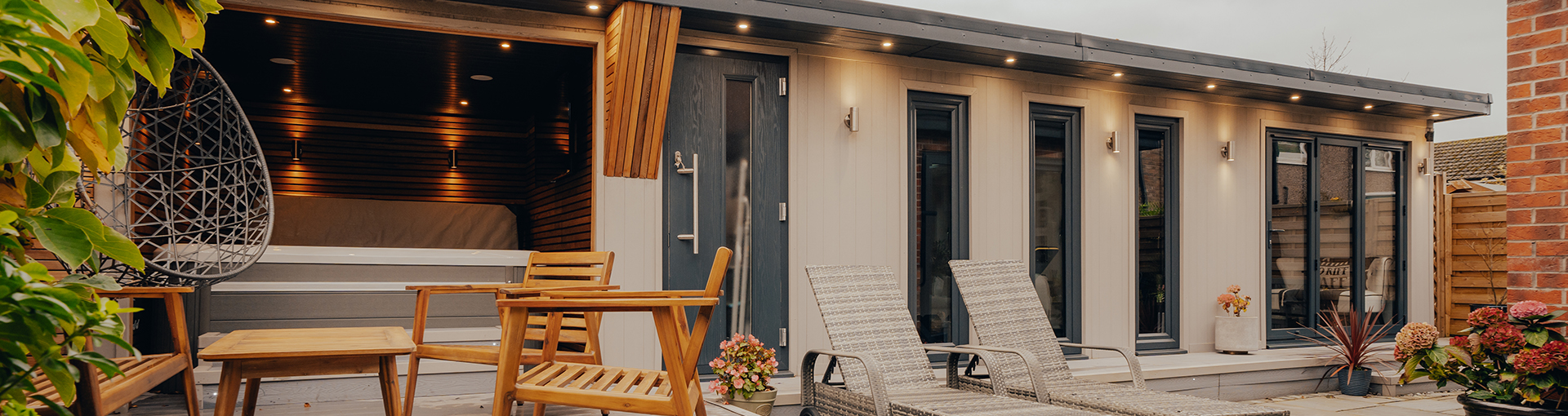


To design a garden room that works year-round in the UK, treat comfort as a system, not a single feature. Combine high-performance insulation across walls, roof and floor, an airtight and well-ventilated build, quality low-E glazing, and heating sized correctly for the space. Get these right and your room stays cosy in January and cool in July.
British weather has a wicked sense of humour. One week you’re squinting through a heatwave, the next you’re scraping frost off the car and wondering if climate change is real after all. So if you’re planning a garden room, the big question isn’t just “will it look nice?” — it’s “Will I actually want to use it in February?”
The good news is that a properly designed garden room can be every bit as comfortable as your house, all year round. The not-so-good news is that plenty of rooms out there were built like glorified sheds with double glazing, and their owners now use them as very expensive storage for the lawnmower.
This guide walks you through how to design a garden room that works year round, with a real focus on the three things that make or break it: insulation, heating and glazing. And if you’d rather have someone sort the whole lot for you, that’s exactly what we do here at Elevate Garden Rooms — but more on that later.
What “year-round” really means in a UK garden room
Let’s clear something up. A “year round garden room” isn’t just one that’s technically weatherproof. It’s one you’ll happily sit in with a cup of tea in December, work from through a grey November, or train in during a July heatwave without feeling like you’ve stepped into a greenhouse.
That means hitting four targets:
- Winter warmth without heating bills that make you weep
- Summer comfort without cooking in your own room
- Low condensation, so nothing goes damp or musty
- Decent soundproofing, so the room actually feels like a proper space
Here’s the bit competitors often gloss over: none of these come from a single product. In the garden room insulation UK conversation, everyone loves to talk about materials, but real comfort comes from a formula — insulation plus airtightness plus ventilation plus correctly sized heating. Miss one and the whole thing wobbles.
Insulation: the make-or-break layer (and where it should go)

Insulation is where year-round comfort lives or dies. And it needs to be everywhere the cold can sneak in — walls, roof and floor. The roof matters more than people expect, because heat rises and escapes upwards given half a chance.
A few things worth understanding in plain English:
- Airtightness stops draughts and heat leaking out through gaps. Great insulation with a leaky build is like wearing a thick coat and leaving it unzipped.
- Vapour control manages moisture as it travels from the warm inside towards colder surfaces. Get this wrong and you’ll find condensation lurking where you can’t see it.
- Thermal bridging is the sneaky one. It’s where heat escapes through solid parts of the structure — timber frames, corners, junctions — which is why some rooms have oddly cold spots even when the insulation spec looks decent on paper.
There are several good insulation options for UK garden rooms. SIPs (structural insulated panels) are among the best performers, offering excellent thermal values and moisture resistance in a strong, quick-to-install unit. Mineral wool is more budget-friendly and brilliant for soundproofing, while spray foam excels at sealing awkward gaps. The right choice depends on your budget, the room’s use and how the whole build-up is detailed.
Signs a room is under-insulated? Cold patches on the walls, a heater that’s working overtime, and condensation forming on the window frames. If any of those sound familiar from a friend’s “cheap” garden room, you’ll know why we bang on about this.
When you’re comparing suppliers, ask about insulation thickness, the materials used, U-values if they can share them, and how the floor is built up. If someone gets vague at this point, that tells you something.
At Elevate Garden Rooms, we design the entire build-up for genuine year-round performance — not just a warm-ish box that looks good in the brochure. If you’d like us to assess your garden’s insulation needs and orientation in person, our site visit and design consultation are completely free.
Heating options for a garden room you’ll actually use in January
If your heating plan is a panic-bought fan heater from the supermarket, we need to talk. With good insulation in place, you won’t need much to stay warm — but the type of heating still matters. Here are the UK-friendly favourites:

- Electric panel or convector heaters — simple, affordable to fit, and perfectly effective in a well-insulated room.
- Infrared heaters — great for warming people and objects directly, so you feel cosy quickly. Ideal for spot heating.
- Electric underfloor heating — steady, invisible, luxurious warmth. A lovely choice for offices and studios where you’re there for hours.
- Air-to-air heat pump (air conditioning unit) — the all-rounder. It heats efficiently in winter and cools in summer, which solves two problems at once.
Whatever you choose, don’t forget the controls. A smart thermostat or timer means the room’s warm when you arrive and not quietly burning money when you’re not there. And if your room does double duty — office by day, gym by night — think about how you’ll heat it consistently through the day.
Glazing: keeping heat in, glare out, and condensation under control
Glazing is where a lot of great insulation quietly goes to waste. Big glass doors look stunning, but cheap units will undo all that hard work in the walls.
The classic debate is double glazing vs triple glazing. Double glazing is the standard and does a solid job for most garden rooms. Triple glazing adds a second air gap for even better heat retention and sound reduction — but it’s heavier and pricier, so it’s worth weighing up whether the extra cost suits your usage and budget.
Beyond the number of panes, look for:
- Low-E coatings and warm edge spacers, which reflect heat back inside and reduce cold edges where condensation loves to form.
- The right doors for the job. Bifolds are gorgeous but have more seals to keep airtight; sliders and French doors each have their perks. Choose based on how you’ll actually use the room.
- Orientation. A south-facing room drinks up lovely winter sunshine, but can overheat in summer without shading or ventilation. This is exactly the kind of thing worth planning early.
Once you’ve settled on your insulation and glazing spec, we’re happy to put together a clear, written, no-obligation quote so you can see your options side by side.
Ventilation and moisture: the unglamorous bit that saves the room
Nobody dreams about ventilation. But breathing, working and — heaven forbid — exercising all pump moisture into the air, and that moisture has to go somewhere. Left unmanaged, it turns into condensation, and condensation turns into damp.
The fix is controlled ventilation: trickle vents, passive vents, or an extractor fan for gyms, saunas and steam rooms. Keeping a consistent low heat also stops surfaces getting cold enough for condensation to settle. And if you’re using the room for something particularly humid, a dehumidifier is a cheap insurance policy.
The trick is ventilating without freezing yourself out. Gentle, controlled airflow plus steady warmth beats flinging a window open in the depths of winter.
Don’t forget the floor, electrics and everyday comfort extras
The details are what separate a good room from a great one:
- Floor insulation keeps cold rising up from the ground, which makes a bigger difference to comfort than people realise.
- Energy-efficient lighting looks smart and keeps running costs sensible.
- Power and data points are essential for a home office — plan them around your desk, not as an afterthought.
- Acoustics matter for music studios and games rooms, where soundproofing keeps you (and the neighbours) happy.
We plan every room around how you’ll actually use it — office, studio, gym, annexe, bar or games room — rather than just filling a footprint.
Common mistakes we see all the time
A quick affectionate roasting of the classics:
- All glass, no shade. Beautiful in the showroom, unbearable in July.
- Heating as an afterthought. Bolting a heater on at the end never works as well as designing warmth in from the start.
- Ignoring ventilation because it’s boring. It’s the least exciting part of the build and quietly one of the most important.
Planning permission and timeline
Here’s the reassuring bit. Most garden rooms fall under permitted development, which means they often don’t need planning permission — provided they’re single storey, stay within height limits (generally up to 2.5m near a boundary), sit behind the front of your house, and don’t cover more than half your garden. Listed buildings, conservation areas and areas of outstanding natural beauty have stricter rules, so it’s always worth checking your specifics.
As for timescales, we typically deliver from design approval to completion in around 6–10 weeks. And because we handle end-to-end project management — from foundations to finishing touches — you’re not left juggling trades.
Your quick year-round checklist
Screenshot this one:
- Insulation: walls, roof and floor, plus proper airtightness
- Heating: sized for the space, with smart controls
- Glazing: quality frames, low-E glass, the right doors for your use
- Ventilation: a proper moisture strategy
- Summer comfort: shading, airflow or cooling
- Build quality: good sealing, minimal thermal bridging, and a solid guarantee
Frequently asked questions
Can a garden room be used all year round in the UK?
Yes, absolutely — as long as it’s designed for it. A well-insulated, airtight room with quality glazing, sensible heating and proper ventilation will stay comfortable through every season. A cheaply built one won’t, which is why the design and build quality matter so much.
What’s the best garden room insulation UK homeowners should look for?
There’s no single winner. SIPs offer superb thermal performance and moisture resistance, mineral wool is affordable and great for soundproofing, and spray foam is excellent at sealing gaps. The best choice depends on your budget, the room’s use, and — crucially — how well the whole build-up is detailed.
Do I need underfloor heating for a year-round garden room?
No, it’s not essential. In a well-insulated room, panel heaters, infrared or an air-to-air heat pump all work brilliantly. Underfloor heating is a lovely upgrade for offices and studios where you spend long, still hours, but it’s a comfort choice rather than a necessity.
Is double glazing enough, or is triple glazing worth it?
Double glazing is perfectly good for most garden rooms. Triple glazing improves heat retention and sound reduction further, but it costs more and weighs more. If you want maximum efficiency or the room sits somewhere especially cold or noisy, it may be worth it — otherwise good-quality double glazing with a low-E coating does the job.
How do I stop condensation in a garden room during winter?
Combine controlled ventilation with a consistent low heat. Trickle vents, passive vents and warm edge spacers on your glazing all help. Keeping surfaces from getting too cold is the key — and a dehumidifier is handy for particularly humid uses like gyms.
How can I stop my garden room overheating in summer?
Plan for it early. Consider the room’s orientation, add shading or blinds, choose glazing with solar control, and make sure there’s good ventilation. An air-to-air heat pump doubles up as air conditioning, which sorts summer comfort in one move.
Do I need planning permission for a garden room?
Usually not, as most fall under permitted development. There are conditions around height, position and how much of your garden is covered, and stricter rules for listed buildings and protected areas. We’re happy to help you check what applies to your property.
How long does it take to design and build a garden room?
We typically complete rooms in around 6–10 weeks from design approval, and we manage the whole process end-to-end so you don’t have to coordinate a single trade yourself.
What guarantee should I expect on a garden room?
A quality garden room should come with a meaningful guarantee. At Elevate Garden Rooms, our rooms are backed by a 5–10 year guarantee, so you can enjoy the space with total peace of mind.
Let’s design a garden room you’ll love in every season
A year-round garden room isn’t about one clever gadget — it’s about getting the fundamentals right and having them installed properly. That’s precisely what we do.
With over 15 years’ experience and more than 100 rooms installed across the North West, we design bespoke garden rooms tailored to how you’ll actually use them — whether that’s a home office, gym, studio, annexe, bar or games room. Every project comes with a free site visit and design consultation, a clear written, no-obligation quote, full end-to-end project management from foundations to finishing touches, and the reassurance of a 5–10 year guarantee.
There’s a little extra sweetener too: right now, every garden room comes with a free 50″ Smart TV or free Bluetooth ceiling speakers — but the offer ends on 30th September, so don’t hang about.
Get in touch with us at Elevate Garden Rooms today, and let’s create a space you’ll want to use all year round.
