
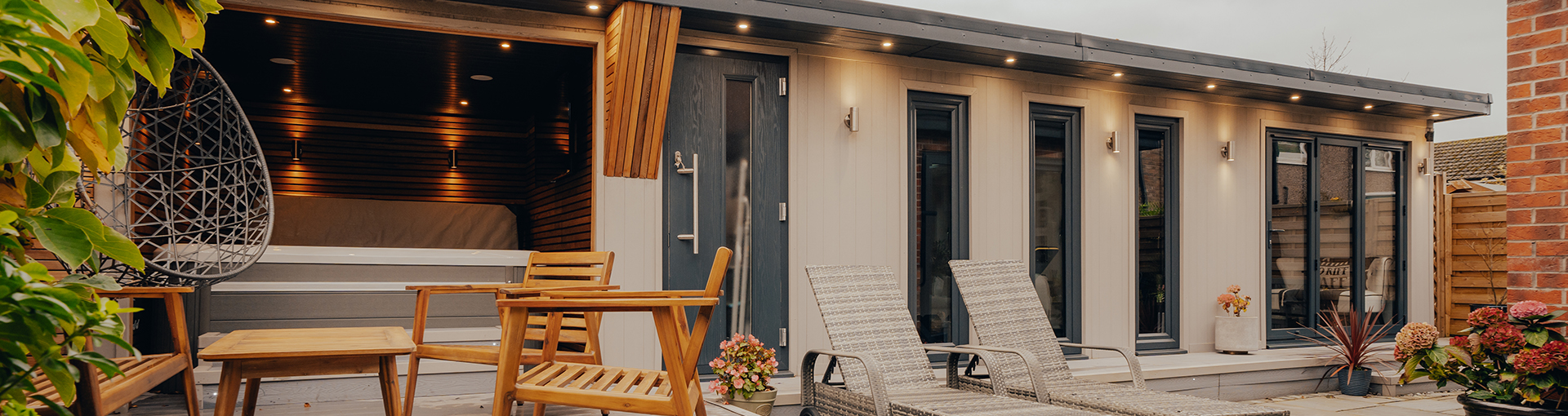
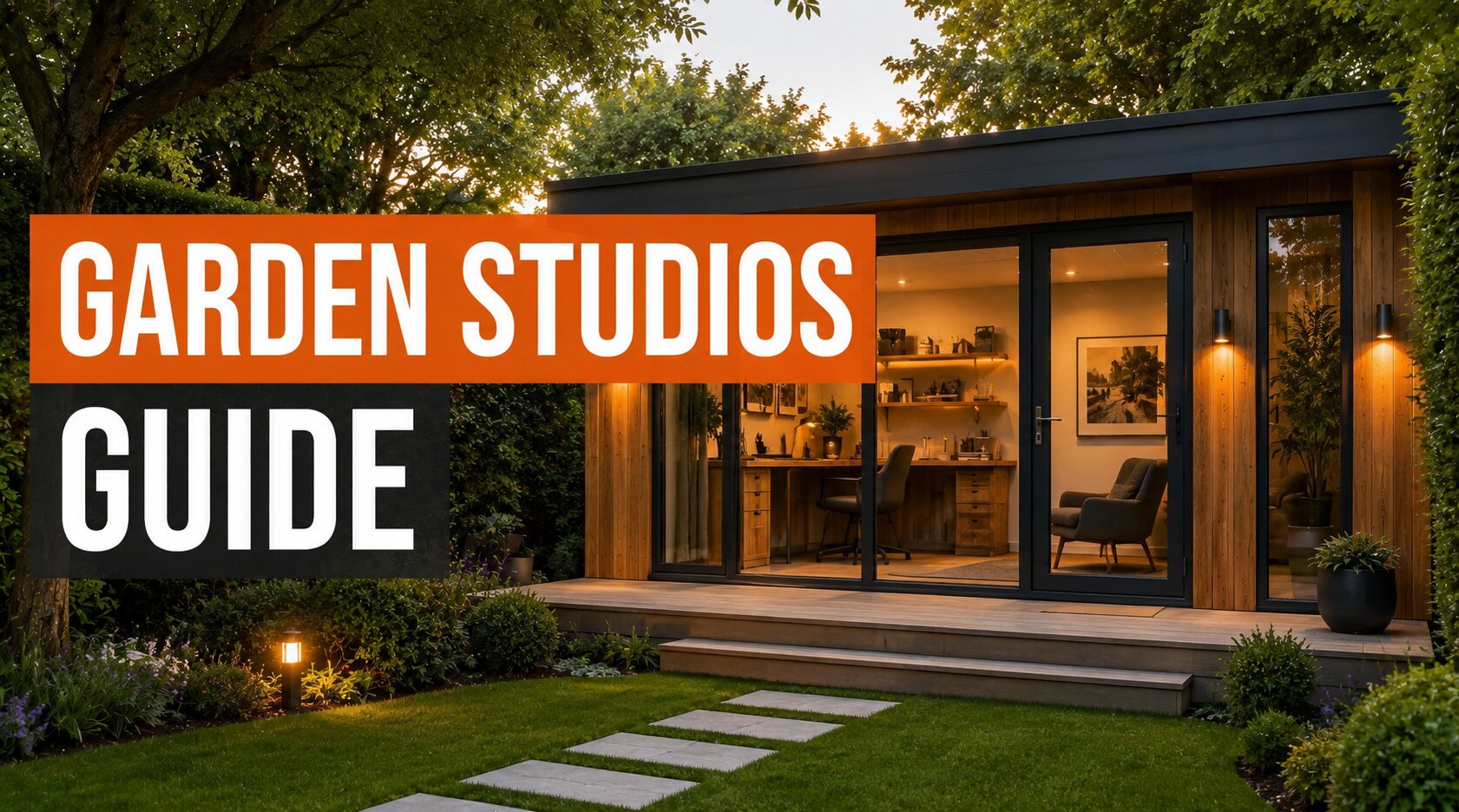

A garden studio gives creatives a dedicated, year-round workspace separate from the house — no commute, no distractions, no sharing a desk with the cereal boxes. The best ones are designed around how you actually work: the right light, sound control, storage, electrics, and insulation for the discipline in question.
There’s a moment every creative knows well. You’re in the middle of something — a canvas half-finished, a backing track almost there, a sewing project spread across the living room floor — and someone wanders in, puts the kettle on, and asks what’s for dinner. The spell breaks. The moment’s gone.
The kitchen table, the spare bedroom corner, the garage with the dodgy light — they’re all versions of the same problem. You’re trying to do serious creative work in a space that wasn’t designed for it, surrounded by things that have nothing to do with it.
A garden studio changes that completely. Step outside, step in, close the door — and you’re somewhere else entirely. Same garden, different world. If you’ve been toying with the idea of building a creative garden room, you’re in the right place. We’ll walk you through everything: design ideas by discipline, the essentials to get right, planning practicalities, and what it’s actually like to build with us.
Why a garden studio works so well for creative people
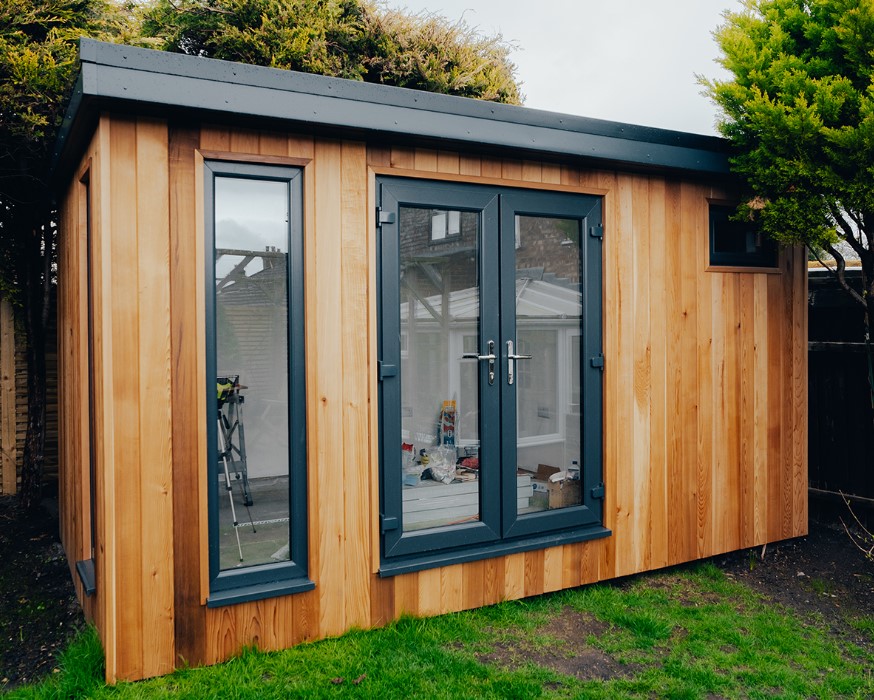
Physical separation is underrated. When your workspace is inside the house, the boundary between “working” and “not working” becomes porous — and that’s a problem in both directions. You drift in and out of creative mode, and the people you live with can never quite tell whether you’re busy or available.
A garden studio solves this in the simplest possible way: it puts actual distance between your creative life and your domestic one. No commute, but a clear threshold. You leave the house, you arrive at work. It’s a surprisingly powerful psychological shift.
There’s also the question of what creative work actually requires from a space. It needs to get messy. It can get noisy. It sometimes involves materials, equipment, or cables that a shared living space simply can’t accommodate. A dedicated studio lets you leave things mid-project, set up your tools exactly how you like them, and return to everything exactly where you left it — without negotiation.
And unlike a traditional summerhouse, a properly insulated garden room isn’t a fair-weather option. Year-round use is the whole point. We build garden studios designed to be comfortable and functional in January just as much as July.
Choosing the right type of creative garden room (by discipline)
The best creative garden rooms aren’t generic boxes — they’re spaces shaped around the specific demands of how their owners work. Here’s what to think about depending on your discipline.
For artists and illustrators
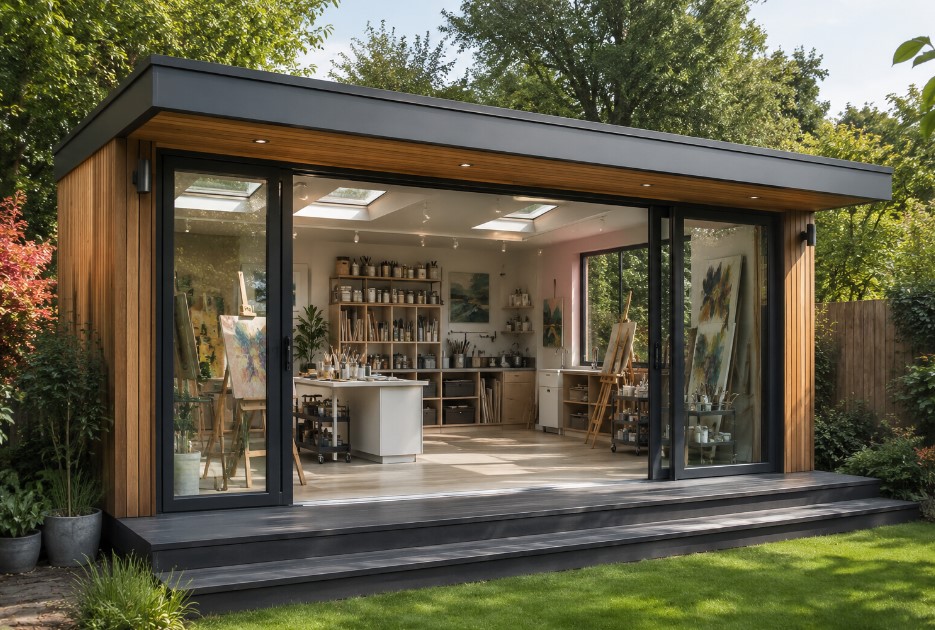
Light is everything. Natural light is especially important for colour mixing and detail work, and north-facing glazing provides the consistent, diffused daylight that artists have sought for centuries — it doesn’t shift with the sun, so your colours stay true. If north-facing glazing isn’t possible given your garden layout, consider how to minimise direct glare through placement and window specification, with large windows and, where suitable, skylights for maximised natural light in an art studio or garden art studio.
Beyond light, artists benefit from hard-wearing, easy-clean surfaces — flooring and walls that can cope with spills without causing panic when the paint comes out. Proper ventilation also matters when you’re using paints or solvents. Generous storage for materials, a layout that lets you step back from your work, specialised storage and work surfaces tailored to artistic needs, and ideally a feature wall for displaying work-in-progress or inspiration are all worth building in from the start, and a utility sink is a practical addition for cleaning brushes and handling messy materials, while good climate control helps protect art materials for year-round use.
For musicians and producers
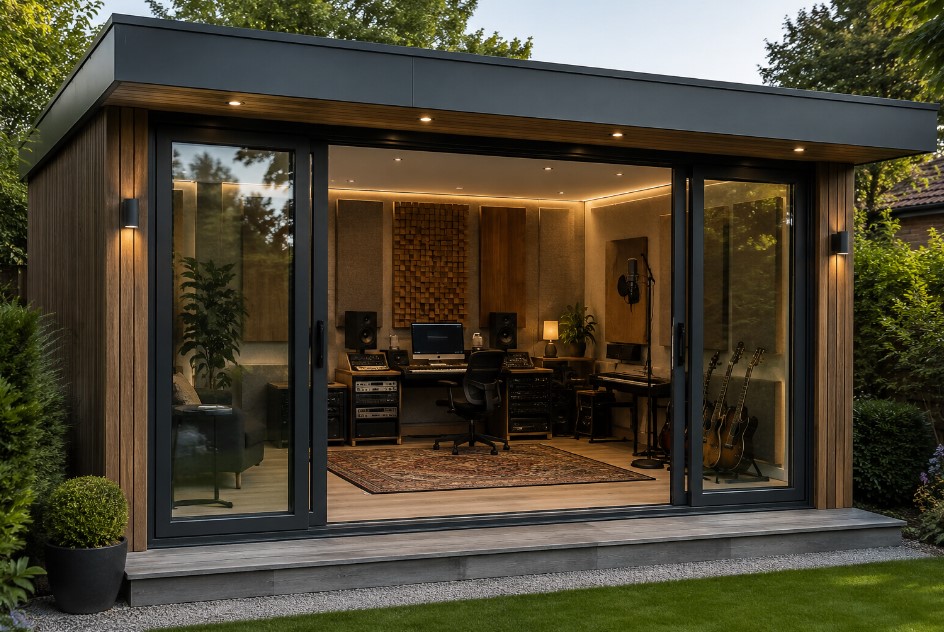
Acoustic performance is the big conversation here, and it’s worth setting expectations clearly. There’s a difference between a space with good acoustic treatment (panels and materials that reduce echo and improve the sound quality inside the room) and one that’s structurally soundproofed to prevent sound leaving the building. The latter is a much more involved engineering challenge.
What we can do is design a garden music studio with acoustic comfort in mind: the right door and window specifications, added insulation, thoughtful material choices, and ventilation that keeps the space fresh without creating noise bleed. We’ll always talk this through honestly on-site, because the right solution depends on what you’re doing, how often, and who lives next door.
Cable management, ventilation (especially if you’re running warm equipment), and getting the power provision right first time are all part of a well-planned music room.
For makers: woodworking, ceramics, sewing, and craft
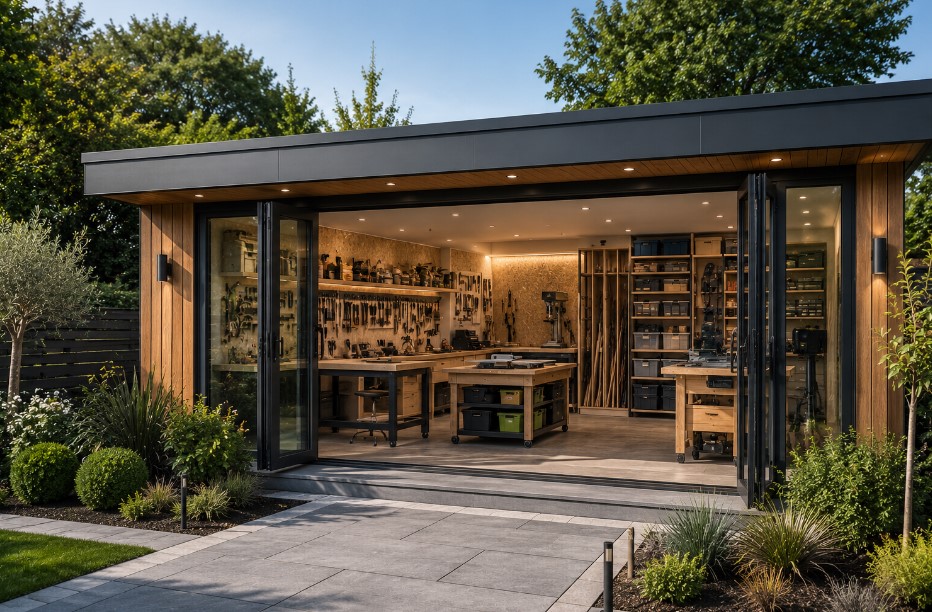
Makers need spaces that work hard. Think robust, easy-clean flooring that can handle tool drops and material mess; extraction or ventilation for dust, fumes, or kiln heat; a workbench layout designed around your workflow; and serious power provision — multiple sockets, ideally positioned, rather than a single ring main and a row of extension leads.
Tool storage that actually works — not just a pile of hooks — can make or break a maker’s studio. Building it into the design from the start, rather than retrofitting it, is always the better move.
For writers and digital creators
The brief here is simpler but still specific. A calm, uncluttered environment matters enormously. Good ergonomic desk space, high-quality broadband connectivity (which we can plan for during the build), and lighting that works for both focused screen work and the odd video call or filming session.
If you’re creating content, your background matters too. A garden studio can be fitted out to look exactly as polished — or as creatively chaotic — as your brand calls for.
The essentials checklist
Whatever you’re building the studio for, these are the fundamentals that’ll determine whether you love it or regret it:
- Full insulation and heating — not optional if you want year-round use. Our garden rooms are built with this as standard, including double-glazed windows and doors.
- Electrical provision — think about where you actually need sockets, not just how many. Task lighting, ambient lighting, and enough circuits for your equipment.
- Ventilation — especially important for music rooms, maker spaces, and any room that’ll get warm in summer.
- Glazing and door placement — the right glazing affects daylight, heat retention, privacy, and security. It’s worth thinking about carefully.
- Storage design — storage that’s built into the space keeps it functional. Storage bolted on afterwards tends to get messy fast.
- Internet connectivity — we can plan cabling and connectivity from the outset, which is far better than running cables retrospectively.
- Security — locks, visibility from the house, and external lighting all contribute to keeping your space and your equipment safe.
Layout and design ideas to make creating easier (and more enjoyable)
A well-designed creative garden room doesn’t just look good — it makes creative work easier and more enjoyable. A few ideas worth considering:
Zone your space. Rather than one open room that serves all purposes equally, think about distinct zones: create, review, store, display. Even in a smaller studio, clever layout can achieve this without it feeling cramped.
Feature walls. Whether it’s a magnetic paint surface, acoustic panels, or simply a bold colour that lifts your mood on a grey morning, a considered feature wall gives a studio its personality.
Hidden storage benches. Seating that doubles as storage is one of the most useful design choices in a creative space — especially if your work involves a lot of materials or equipment that doesn’t need to be on permanent display.
A space that transitions. A studio by day, a place to wind down by evening. A well-specced creative garden room with the right lighting and a comfortable chair is a pretty enjoyable place to be even when you’re not working.
Planning permission and practicalities in the UK
Many garden rooms fall under permitted development rights in the UK, which means no formal planning permission is required. However, this depends on a number of factors: the size and height of the structure, its position in the garden, whether the property is in a conservation area, and whether the building is listed. It’s always worth checking with your local planning authority before starting a build.
As a general guide, single-storey outbuildings under 4m in height (or 3m with a dual-pitched roof), positioned to the rear of the house and not covering more than 50% of the garden, are typically permitted development. We can talk you through what’s likely to apply to your site during our initial consultation.
In terms of lead times, our typical timeframe from design approval to completion is 6–10 weeks, depending on the complexity of the project and, inevitably, the weather. We’ll always give you a realistic timeline upfront.
What it’s like to build with us
We know that commissioning a garden studio is a significant investment — of money, time, and trust. That’s why we’ve built our process around making it as smooth and straightforward as possible.
Here’s how it works:
- Get in touch and book your site visit — we’ll come to you, assess your garden, and discuss what you have in mind.
- Agree on your design — our design team works closely with you to create something that fits both your vision and your space.
- Receive your written quote — clear, itemised, no hidden fees, and no-obligation. You’ll know exactly what you’re getting before anything starts.
- Watch it come to life — our fully qualified, fully insured team manages every aspect of the build from foundations to finishing touches.
With over 15 years’ experience, more than 100 garden rooms installed across the North West, and a 5–10 year guarantee on all our buildings, we’re not a company that disappears once the cheque clears. We’re here before, during, and after.
We cover a wide range of locations across the North West of England, including Warrington, Manchester, Liverpool, Chester, Stockport, Altrincham, Wilmslow, Knutsford, Northwich, St Helens, Wigan, and many more.
How much does a garden studio cost in the UK?
The honest answer is: it depends. Size, glazing specification, insulation level, electrical provision, interior finishes, site access, and any additional features all affect the final figure. A compact writer’s studio with a simple fit-out sits at a very different price point to a large music room with specialist acoustic treatment and high-end finishes. Check our blog.
What we’ll always give you is a clear, itemised written quote before any work begins — so you can see exactly what you’re paying for and there are no unpleasant surprises. The best way to get an accurate figure is to talk to us.
We also occasionally run special offers on garden room builds, so it’s always worth asking when you get in touch.
Real-world creative studio use cases
Need a bit of inspiration for what your studio could look like? Here’s how some of our customers have used theirs:
- Painter’s studio: North-facing glazing for consistent natural light, washable floor tiles, a full-height storage wall for canvases and materials, and a corner sink.
- Music room: Acoustic insulation and material specification to reduce sound transmission, considered ventilation to handle equipment heat, and cable management built into the design from the start.
- Maker studio: Epoxy resin floor for durability, a large worktop along one wall, integrated tool storage, and high-capacity power provision.
- Hybrid creative office: Clean, minimal aesthetic with ergonomic desk space, great broadband, considered filming background — works as a studio and a professional video call backdrop.
Frequently asked questions
Do I need planning permission for a garden studio in the UK?
In many cases, no. Garden rooms often fall under permitted development rights, which means no formal planning permission is required. The key factors are size, height, position in the garden, and whether the property has any special designations (listed building, conservation area). We recommend checking with your local planning authority, and we’re happy to talk through what’s likely to apply to your site.
Can I use a garden studio all year round?
Absolutely. Our garden rooms are fully insulated with double-glazed windows and doors, making them as comfortable in February as they are in August. Year-round usability is a core part of how we design and build — we don’t do “fair-weather” garden rooms.
How long does a garden studio take to install?
Our typical lead time from design approval to completion is 6–10 weeks, depending on the complexity of the build and weather conditions. We’ll always give you a realistic timeline as part of your written quote.
Can you help make a music studio quieter?
We can design with acoustic comfort in mind — the right materials, insulation, door and window spec — to reduce sound transmission and improve the acoustic quality inside the room. Achieving full soundproofing is a more complex structural challenge, and the right approach depends on your situation. We’ll always be upfront about what’s achievable and advise based on your specific use-case and site.
Can I customise the inside of my garden studio?
Yes — fully. From interior wall finishes and flooring to lighting, storage, electrical layout, and furniture, we tailor every detail to how you want to use the space. No off-the-shelf solutions.
What maintenance does a garden studio need?
Our garden rooms are built with low maintenance in mind, using high-quality, weather-resistant materials. We recommend occasional external cleaning and periodic checks of seals and fixings to keep everything in top condition — but there’s no major annual maintenance programme required.
Do you offer a site survey and a written quote?
Yes. We offer a free design consultation and site visit, followed by a clear, itemised, no-obligation written quote. Everything is transparent before any work begins.
Which areas do you cover?
We serve a wide range of locations across the North West of England, including Warrington, Manchester, Liverpool, Chester, Stockport, Altrincham, Wilmslow, Knutsford, Northwich, Wigan, Bolton, Runcorn, Crewe, Macclesfield, and many more. Not sure if we cover your area? Just ask.
Ready to create your garden studio?
If you’ve made it this far, you probably already know a garden studio would change how you work. A well-designed garden studio can also add value at home by creating extra living space, whether you need a garden office or a more flexible home space. Estate agents often treat good garden studio rooms as a selling point because an extra room can increase property appeal and even increase property value significantly. They’re also often seen as more attractive than traditional extensions, adding usable space without changing the main house as heavily and supporting long-term property value.
Tell us what you make, how you like to work, and what you wish your current setup did better — and we’ll help you design a space that fits. Book a free site visit and design consultation, request our brochure, visit our showroom, or drop us a message and we’ll take it from there. A clear, no-obligation quote is always the next step, never the first awkward ask.
